

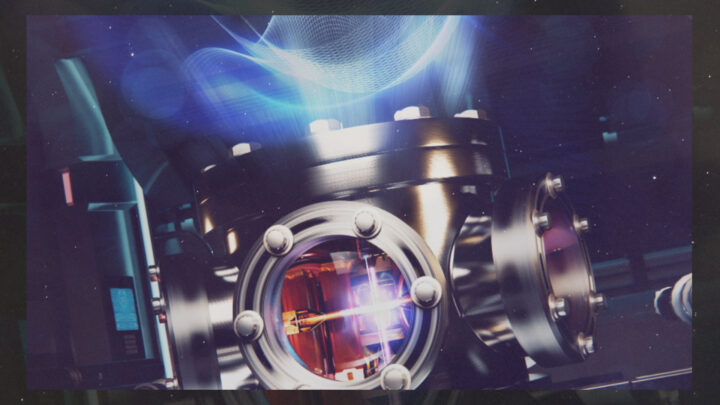
Creating new drugs or medical treatments are some of the great promises of quantum computing. Scientists at the University of Sydney have, for the first time, used a quantum computer to simulate the chemical dynamics of real compounds, a vital step towards modelling more complex molecules and designing bespoke chemicals that could lead to improved sunscreen or skin cancer treatments.
The innovative work of Professor Ivan Kassal and Kysics Horizon Fellow Dr Tingrei Tan, leverages a novel, highly resource-efficient encoding scheme implemented on a trapped-ion quantum computer in the University of Sydney Nanoscience Hub, with implications that could help transform medicine, energy and materials science.
Until now, quantum computers have been limited to calculating static properties of molecules – such as their energies – leaving the dynamic, time-evolving processes largely inaccessible given their complexity. However, this research pushes the frontier by simulating how molecules behave when excited by light – a process involving ultrafast electronic and vibrational changes that classical computers struggle to model accurately or efficiently.
This development holds great promise for understanding a wide array of light-driven chemical phenomena. Applications range from photosynthesis and DNA damage caused by UV radiation to advanced medical therapies like photodynamic therapy for cancers or skin disorders and sunscreens. For instance, a better grasp of ultrafast photo-induced processes could accelerate the discovery of new drugs, improve the design of energy-efficient solar cells, and contribute to the development of innovative photo-active materials.