
Friday, May 15 2026
•Matt
To mark International Women's Day, ANSTO published profiles of eight pioneering women whose discoveries underpin the physics and chemistry used at the organisation today. From Marietta Blau's nuclear emulsions to Rosalind Franklin's Photograph 51 to Lise Meitner's co-discovery of fission, the stories share a common thread: transformative science done without credit, pay, or prizes that went to the men who followed.
Thursday, May 14 2026
•Matt
Full membership of the European Southern Observatory would cost Australia around $400 million over ten years — but a new economic analysis by UNSW Sydney argues the country is already missing out on far more. With astronomy generating roughly $330 million in annual economic value today, and the world's largest telescope, the Extremely Large Telescope, set to begin operations in 2030, the case for joining ESO is being put in unusually concrete terms.
Wednesday, May 13 2026
•Matt
A study two decades in the making has revealed that the human brain's model of gravity is so deeply embedded that it persists — and misfires — long after astronauts enter microgravity. Researchers from Université catholique de Louvain found that astronauts consistently over-grip objects in space because their brains still anticipate Earth's gravitational pull, and that the process reverses imperfectly on return, with mis-calibrated grip force taking days or weeks to correct.
Tuesday, May 12 2026
•Matt
On April 1, 2026, NASA launched Artemis II — the first crewed mission to fly to the Moon in over fifty years. Over ten days, Commander Reid Wiseman, pilot Victor Glover, and mission specialists Christina Koch and Jeremy Hansen flew further from Earth than any humans in history, swung around the lunar far side, and splashed down safely off the coast of San Diego on April 10. Here's what happened, why it matters, and what comes next.
Monday, May 11 2026
•Matt
A Curtin University-led research team has made the first-ever direct measurement of the instantaneous power of jets from a black hole. Using a radio telescope network spanning the Earth to observe the famous Cygnus X-1 binary system, researchers tracked the black hole's "dancing jets" — bent by its companion star's stellar wind — and calculated a power output equivalent to 10,000 Suns, with the jets travelling at half the speed of light.
Friday, May 8 2026
•Matt
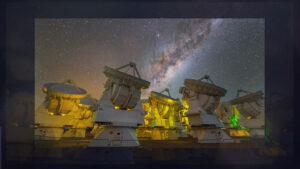
The Australian Academy of Science has condemned the federal government's decision to withdraw from its strategic partnership with the European Southern Observatory, warning the move will shut Australian researchers out of the world's premier optical telescopes from 2027. The withdrawal directly contradicts the Academy's Astronomy Decadal Plan 2026–2035, which identified full ESO membership as essential to Australia's research future.
Thursday, May 7 2026
•Matt
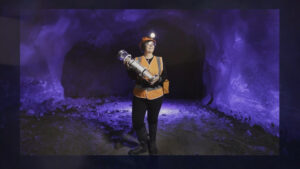
The Stawell Underground Physics Laboratory in regional Victoria — the Southern Hemisphere's first deep underground physics lab — has confirmed that cosmic radiation levels inside are low enough to support its dark matter search. Scientists measured just 30,000 cosmic muons inside over the course of a year, compared to the 8.4 billion that would be expected at the surface. The SABRE South experiment is set to begin taking data before the end of 2026.
Wednesday, May 6 2026
•Matt
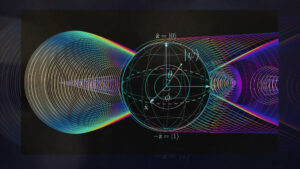
Dr Dominic Williamson from the University of Sydney has published a new approach to quantum error correction that borrows from the mathematical framework of lattice gauge theory — the same formalism underlying the Standard Model of particle physics. The technique, developed during a sabbatical at IBM, could significantly reduce the number of physical qubits required to build fault-tolerant quantum computers, with elements already being incorporated into IBM's quantum roadmap.
Tuesday, May 5 2026
•Matt
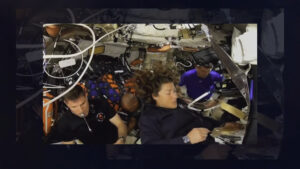
The ten-day Artemis II lunar flyby is not a scientific endpoint — it's the beginning of a data-gathering effort that will take years to fully analyse. Radiation physicist Dr Mitra Safavi Naeini outlines the hard limits of what a single short mission can resolve, and what the measurements taken aboard Orion will contribute to designing the habitats, shelters, and operational protocols for every future mission to the Moon and beyond.
Monday, May 4 2026
•Matt
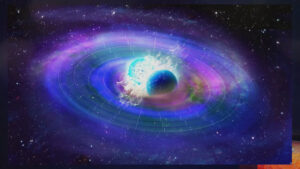
A Monash University-led international team has found compelling evidence for the long-predicted pair-instability mass gap — a range of black hole masses between roughly 50 and 130 solar masses that physics says cannot be produced by dying stars. Using data from LIGO, Virgo, and KAGRA's fourth observing catalog, researchers confirmed that heavier black holes in binary mergers appear to be second-generation objects: products of earlier collisions rather than direct stellar collapse.
Friday, May 1 2026
•Matt
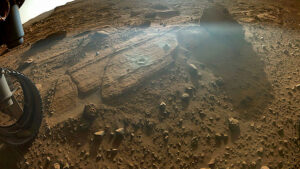
Data from NASA's Perseverance rover has revealed unusually high concentrations of nickel in the ancient Neretva Vallis river channel on Mars — the highest ever detected in Martian bedrock. On Earth, nickel at these levels is often associated with ancient microbial life, and its co-location with iron-sulfide minerals and organic compounds is raising eyebrows in the astrobiology community.
Thursday, April 30 2026
•Matt
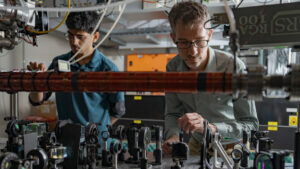
Physicists at the Australian National University have observed pairs of helium atoms in a genuine quantum superposition — simultaneously existing in two locations while entangled in motion. It's a result that had eluded researchers worldwide for years, and one that opens a new experimental window into one of physics' deepest unsolved questions: how does quantum mechanics connect with gravity?
Wednesday, April 29 2026
•Matt
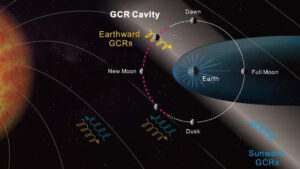
When NASA launched Artemis II on April 1, 2026, it sent four astronauts into the deep-space radiation environment for the first time since the Apollo program. Beyond Earth's magnetic shelter, the crew faced three overlapping radiation hazards: Van Allen belt particles, unpredictable solar particle events, and a chronic background of galactic cosmic rays. ANSTO radiation dosimetry expert Dr Mitra Safavi Naeini explains what was being measured — and why no single number can capture it.

Tuesday, April 28 2026
•Matt
A team from CSIRO, RMIT University, and the University of Melbourne has demonstrated the world's first proof-of-concept quantum battery — a device that charges, stores, and releases energy using the strange rules of quantum mechanics. Unlike conventional batteries, this one becomes faster to charge as it grows larger, a counterintuitive property that could one day power electric vehicles or quantum computers.
Monday, April 27 2026
•Matt
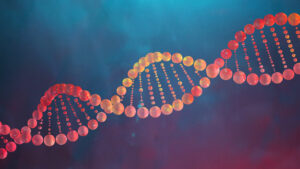
Researchers have confirmed all five canonical nucleobases — the information-carrying units of DNA and RNA — in samples returned from asteroid Ryugu by Japan's Hayabusa-2 mission. The discovery adds compelling weight to the idea that the molecular ingredients of life may have been widespread across the early solar system, and delivered to Earth billions of years ago aboard carbonaceous asteroids.

Saturday, February 21 2026
•Matt
A sea-ice scientist at the University of Tasmania is part of a new NASA satellite mission designed to deliver greater global coverage of land, sea and ice than all prior missions combined.

Friday, February 20 2026
•Matt
Marking a significant step toward a quantum-secure internet, researchers have demonstrated device-independent quantum key distribution - or QKD - over optical fibers spanning 100 kilometers.
Thursday, February 19 2026
•Matt
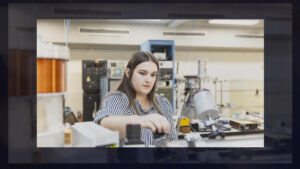
A Sydney PhD student has recreated a tiny piece of the Universe inside a bottle in her lab, producing cosmic dust from scratch. The results shed new light on how the chemical building blocks of life may have formed long before Earth existed.

Wednesday, February 18 2026
•Matt
NASA engineers are reviewing data from a February 12 confidence test of the Space Launch System that's at the heart of the Artemis II mission.

Tuesday, February 17 2026
•Matt
Hypersonix Launch Systems - from just around the corner from Trekzone HQ - has announced the launch window for a landmark flight test that will move sustained hypersonic flight closer to operational reality.

Friday, February 13 2026
•Matt
Scientists have unveiled a new approach to powering quantum computers using quantum batteries -- a breakthrough that could make future computers faster, more reliable and more energy efficient.
Thursday, February 12 2026
•Matt
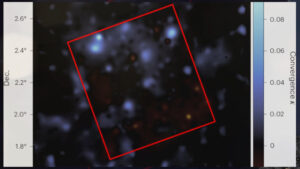
An ultra-high-resolution map of mass in the Universe, revealing how dark matter has shaped the growth of galaxies over the past 10 billion years, is published in Nature Astronomy.

Wednesday, February 11 2026
•Matt
Like something out of the Addams Family, scientists have created a detachable robotic hand that can crawl and grab objects.

Tuesday, February 10 2026
•Matt
Near-weightless conditions can mutate genes and change the physical structure of bacteria and phages, altering regular interactions, according to US scientists.

Monday, February 9 2026
•Matt
The first crewed mission to lunar orbit in 54 years will have to wait at least another month following anomalies detected during the pre-flight wet dress rehearsal last week.

Friday, February 6 2026
•Matt
SKA-Mid, like its counterpart SKA-Low in Australia, is an array where many individual antennas are connected by optical fibre to act like one much larger telescope, equivalent in size to the distance between its furthest antennas. "Fringes" are obtained when signals received by two or more antennas are combined successfully.

Thursday, February 5 2026
•Matt
In a blow for fans of life on other planets, Jupiter's moon Europa may not have the deep-sea tectonic activity required for life on the deep seafloor, according to international researchers.

Wednesday, February 4 2026
•Matt
Varda Space Industries W-5 capsule has returned to Earth. The third capsule to land at the Koonibba Test Range in under twelve months has our friends at Southern Launch over the moon...

Monday, February 2 2026
•Matt
40 years ago on January 28 the destruction of space shuttle Challenger would rock the American space agency to it's core. Seventeen years later, shuttle Columbia was destroyed on reentry. Fourteen astronauts slipped the surly bonds of Earth to touch the face of God.

Sunday, February 1 2026
•Matt
Humanity is returning to the moon with the first crewed mission since Apollo 17 fifty four years earlier.

Friday, January 30 2026
•Matt
Moss could survive in space for up to 15 years, according to international researchers, who sent moss spore samples to the International Space Station, where they survived in the vacuum of space for nine months before returning to Earth.

Thursday, January 29 2026
•Matt
Macquarie University researchers have fully mapped how noise spreads through quantum computers over time to show that glitches link together across different moments, creating a form of 'memory' that undermines calculations.

