

The Australian Academy of Science has condemned the federal government’s decision to withdraw from its strategic partnership with the European Southern Observatory, warning the move will shut Australian researchers out of the world’s premier optical telescopes from 2027. The withdrawal directly contradicts the Academy’s Astronomy Decadal Plan 2026–2035, which identified full ESO membership as essential to Australia’s research future.
Astronomy is booming globally. New telescopes are coming online and ground-based observatories are pushing to resolutions previously unimaginable. It’s one of the most exciting periods for observational astronomy in living memory.
Which is why the Australian Academy of Science has reacted with such alarm to a decision by the federal government to withdraw Australia from its strategic partnership with the European Southern Observatory — the ESO.
The statement from the Academy, titled “As the world looks up, Australia looks away,” was direct. The decision is, in their words, short-sighted, and risks inflicting lasting damage on a research ecosystem that is already dealing with deep structural underinvestment.
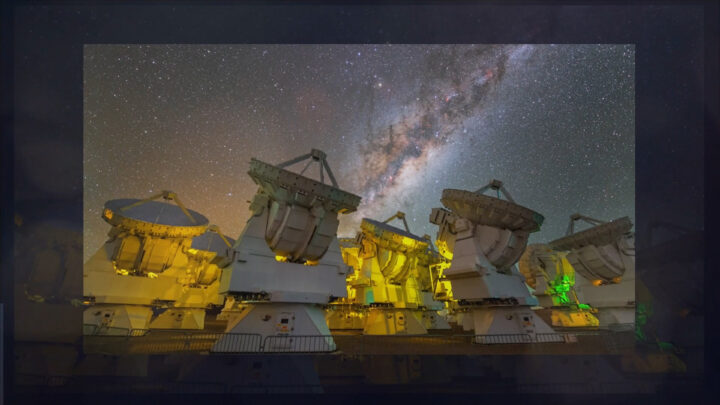
Australia established its strategic partnership with ESO back in 2017. ESO is the foremost intergovernmental astronomy organisation in the world, operating a suite of world-class observatories in the Atacama Desert in Chile, including the Very Large Telescope Interferometer — a facility capable of resolving detail equivalent to distinguishing a human on the surface of the Moon. ESO is also building the Extremely Large Telescope, which will be the largest optical telescope on Earth.
Under the government’s decision, access to ESO will be shut off entirely from 2027. Professor Margaret Sheil, Secretary of Science Policy at the Australian Academy of Science, was unambiguous about the implications. Stepping back now risks Australia no longer remaining at the forefront of astronomy research and discovery. And the timing is particularly painful, because full membership of ESO was the headline recommendation of the Academy’s Astronomy Decadal Plan 2026 to 2035, released only last year. The government’s decision directly contradicts that plan.
The consequences go well beyond pure research. Australia’s involvement with ESO had been fuelling a thriving domestic instrumentation program — the engineering and manufacturing work that comes with contributing to world-leading facilities. It was also growing astronomy’s contributions to adjacent fields: medicine, defence, mining technology, communications.
And there’s the pipeline argument. Astronomy is one of the most effective sciences for inspiring the next generation of students into STEM. Stepping back from a flagship international collaboration at exactly the moment the world is accelerating its astronomical ambitions sends a discouraging signal so the Academy is calling for the decision to be reversed. The clock is ticking.