

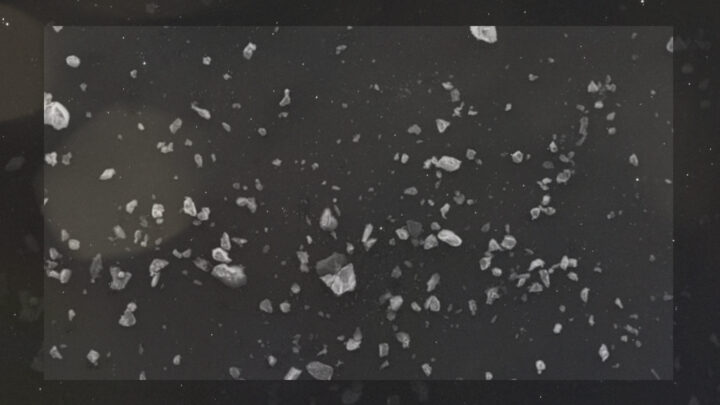
As NASA prepares to send astronauts back to the moon for the first time in over 50 years, new research from the University of Technology, Sydney has found that lunar dust is less harmful to human lung cells than previously feared, and significantly less toxic than common Earth-based air pollution.
Lead researcher and UTS PhD candidate Michaela B. Smith investigated the impact of the most accurate, new-generation lunar dust simulants on human lung cells in the lab. She compared the effects to those of airborne particulate matter collected from a busy street in Sydney.
The research focused on fine dust particles – of less than 2.5 micrometres, which are small enough to bypass the body’s natural defences and penetrate deep into the lower airways of the lungs. The study used two different types of lung cells, representing the bronchial and alveolar regions of the lung.
Results showed that Earth dust induced a greater inflammatory response and was more toxic to the cells than the lunar dust simulants. The paper suggests the primary mechanism of toxicity from lunar dust is mechanical damage caused by the particles’ irregular shape and rough edges as they are internalised by cells. Crucially, the lunar simulants did not trigger significant oxidative stress–a key chemical damage pathway often associated with fine particle toxicity.
The health of astronauts was a concern after the Apollo missions, where crew members experienced respiratory issues, and while the findings reduce a critical risk factor, NASA is still taking the threat of dust exposure seriously. Smith, who recently visited the NASA Johnson Space Center in Houston, saw new engineering solutions firsthand.
One of the key changes she noted was the way astronauts maneouver in and out of rovers – with the space suits never coming inside the cabin, preventing dust from contaminating the internal area.
The research has paved the way for Smith’s current PhD work, which investigates the next frontier of space health: the effect of microgravity on lung function.