

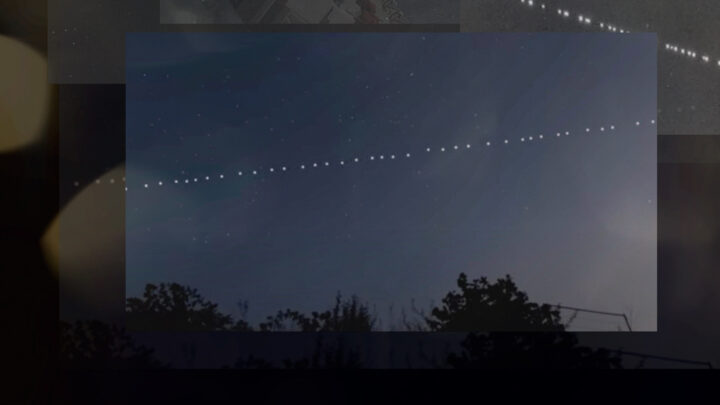
Curtin University researchers have undertaken the world’s biggest survey of low frequency satellite radio emissions, finding Starlink satellites are significantly interfering with radio astronomy observations, potentially impacting discovery and research.
Unintended signals from satellites like Starlink – leaked from onboard electronics – can drown out the faint radio waves astronomers use to study the universe. The research team from the Curtin node of ICRAR collected and analysed 76 million images of the sky using a prototype station for the Square Kilometre Array, which will be the world’s largest and most sensitive radio telescope once fully built later this decade.
PhD candidate and study lead Dylan Grigg said the team detected more than 112,000 radio emissions from 1806 Starlink satellites, making it the most comprehensive catalogue of satellite radio emissions at low frequencies to date. He said the issue wasn’t just the number of satellites, but the strength of the signals and the frequencies they were visible at.
I should note that Starlink isn’t the only satellite network, by it is by far the biggest. Curtin Institute of Radio Astronomy Executive Director and study co-author John Curtin Distinguished Professor Steven Tingay said there was scope for regulatory improvement to help avoid satellites interfering with research. He says satellite technology and radio astronomy were both important but needed to exist in harmony.