

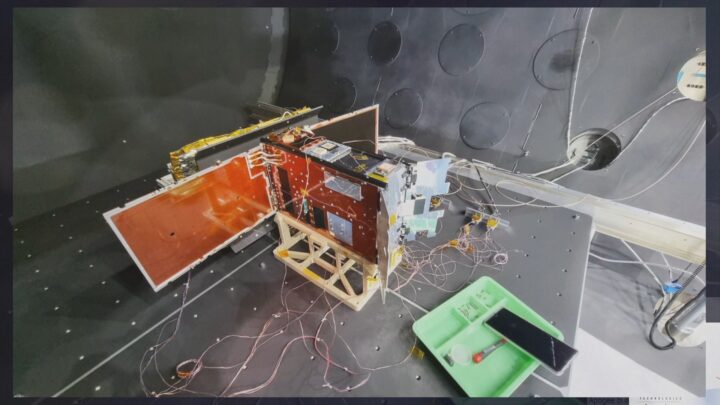
Australia’s SpIRIT nanosatellite has successfully completed the initial phase of its mission, marking a milestone achievement for Australia’s place and reputation in the global space industry.
Led by the University of Melbourne, in collaboration with the Italian Space Agency, the Space Industry Responsive Intelligent Thermal nanosatellite – known as ‘SpIRIT’ – is the first space telescope funded by the Australian Space Agency to carry a foreign space agency’s scientific instrument as its main payload.
Since its launch aboard a SpaceX Falcon 9 rocket from California in December 2023, SpIRIT has circled the Earth more than 9,000 times – travelling a distance comparable to a round trip between Earth and Mars – and has been in orbit for over 600 days.
Principal Investigator, University of Melbourne Professor Michele Trenti said SpIRIT’s successful commissioning period is a true milestone for Australian technological advancements and space capabilities.
The completion of the first phase of SpIRIT’s mission was marked with the deployment of its winged thermal management system and selfie stick, which it used to take a ‘selfie’ in space. The image, beamed back to Earth, showed the nanosatellite crested in emblems of partners who made its mission possible.
SpIRIT’s unique wings, designed by the University of Melbourne, helps keep the space telescope cool and increase science performance. Now in its final configuration, the spacecraft measures almost a meter in size.