

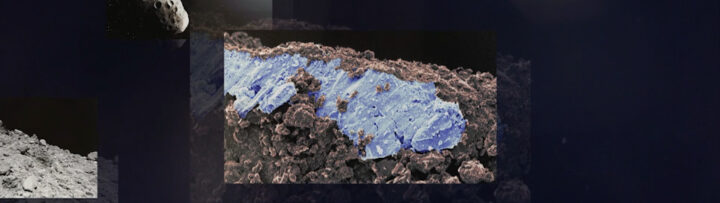
Fluids may have flowed within the parent body of the near-Earth asteroid Ryugu more than one billion years after it formed, according to research published in Nature.
The findings indicate that such bodies, known as carbonaceous asteroids, may have retained two to three times more water than previously thought. Understanding the history of fluids on carbonaceous asteroids is important as it can have implications for the origin of water on terrestrial planets.
Carbonaceous asteroids, rich in carbon and water, are the most common objects in the outer regions of the asteroid belt of the Solar System. They are thought to have formed from dust and ice in the outer Solar System and may have delivered water and other substances to the terrestrial planets.
Figuring out the aqueous activity in such asteroids can provide insights into their evolution. Although some analyses of carbonaceous asteroids, including Ryugu, have identified fluid–rock interactions within a few million years after parent body formation, longer-term aqueous histories have been poorly understood.