

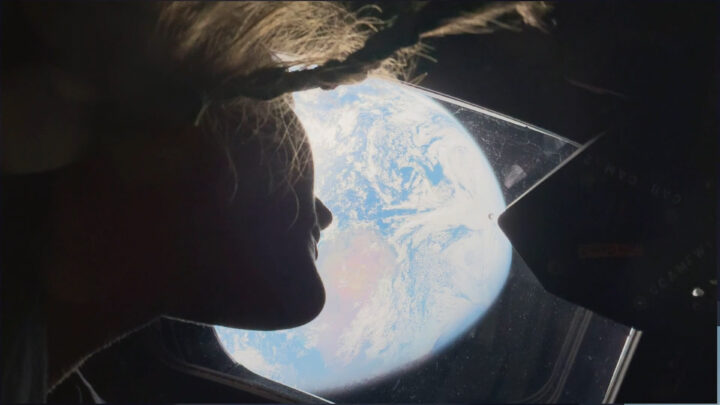
On April 1, 2026, NASA launched Artemis II — the first crewed mission to fly to the Moon in over fifty years. Over ten days, Commander Reid Wiseman, pilot Victor Glover, and mission specialists Christina Koch and Jeremy Hansen flew further from Earth than any humans in history, swung around the lunar far side, and splashed down safely off the coast of San Diego on April 10. Here’s what happened, why it matters, and what comes next.
NASA’s first crewed Artemis mission was a ten-day journey that rewrote the human spaceflight record book and set the stage for everything that comes next.
The mission launched on 1 April 2026, at 6:35 in the evening Eastern time, from Launch Complex 39B at Kennedy Space Center in Florida. The Space Launch System — NASA’s most powerful rocket since Saturn V, generating 8.8 million pounds of thrust — propelled the Orion spacecraft, named Integrity, to a precise translunar trajectory. On board: Commander Reid Wiseman, pilot Victor Glover, mission specialist Christina Koch, and Canadian Space Agency mission specialist Jeremy Hansen.
This crew made history before the mission even launched. It was the first crewed mission to the Moon to include a woman — Christina Koch. The first to include a Black astronaut — Victor Glover. And the first to include a non-American — Jeremy Hansen. Over the ten days that followed, they added to that history together.
The lunar flyby occurred on April 6th. The crew swung around the far side of the Moon, reaching a maximum distance from Earth of 252,756 miles — surpassing the previous distance record set by Apollo 13 in 1970, who flew the farthest under very different circumstances. By the time Orion completed its journey, the total mission distance covered was 694,481 miles.
During the flyby, the crew photographed the Orientale basin — a massive ancient impact scar on the Moon’s far side — and conducted a series of scientific and operational objectives, including manual piloting demonstrations, radiation monitoring, fitness assessments, and biomedical sampling designed to characterise how the human body responds to deep-space conditions.
The return to Earth came on April 10th. Orion hit the atmosphere at about 24,600 miles per hour — roughly Mach 33 — and survived the fiery descent that had drawn close attention, given known heat shield anomalies from Artemis I. After a six-minute communications blackout caused by the plasma sheath surrounding the capsule, contact was re-established. Drogue parachutes deployed at around 22,000 feet, followed by the three main chutes at 6,000 feet. Splashdown occurred at 5:07 in the afternoon Pacific time, off the coast of San Diego, with the USS John P. Murtha standing by as the recovery vessel.
Now attention turns to what follows. Artemis III, an Earth-orbit systems demonstration, is on the schedule for 2027. Artemis IV targets the first actual lunar surface landing in 2028.
The era of sustained human return to the Moon has begun.