

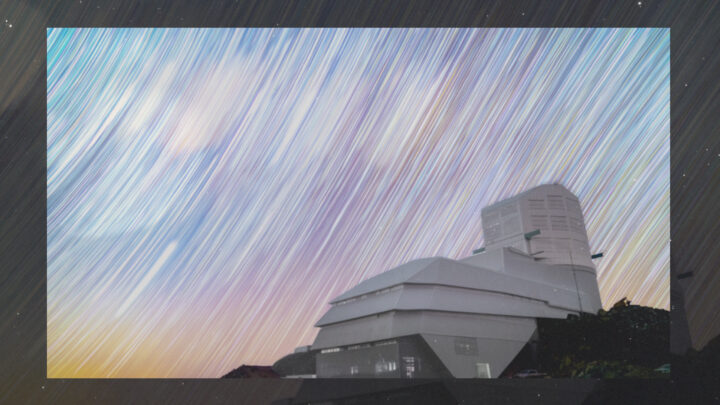
A powerful new telescope expected to unlock deep mysteries of the cosmos and our place within it, has released its first images.
For the first time, astronomers will be able to image the entire southern sky in exquisite detail every few nights, which is expected to impact nearly every area of optical astronomy and make new discoveries. Australian scientists and data experts played an important part in making the telescope project a reality.
Astronomers expect 10 million daily alerts that objects have either changed in brightness or in position, some of which will be discoveries of new phenomena. Science Lead for the Australian collaboration, University of Melbourne Professor Rachel Webster, said the US-led Vera C. Rubin Observatory with its giant eight metre mirror, named after the pioneering American astronomer who first measured dark matter around galaxies, will reach into new corners of our universe far beyond where modern telescopes have seen before.
The scientific program enabled by the telescope will impact nearly every area of optical astronomy, from dark matter and dark energy which tell us how our universe evolves, to the supermassive black holes in the cores of galaxies.
The highly collaborative, international initiative brings together world leading astrophysicists, data experts and pioneering new technology because while existing telescopes image very small areas of sky at one time, the fully-automated Vera C. Rubin Observatory’s telescope captures observations of the southern sky every three nights in six different filters thanks to its massive digital camera – the largest in astronomical history.
The camera alone weighs three tonnes, contains three lenses with the largest more than 1.5 metres, and has a sensor with 3.2 billion pixels. For comparison, the latest iPhone has a sensor with 48 million pixels.